
Understanding the School Purchasing Cycle:
Timing Outreach for K–12 Decision Makers
For organizations working with K–12 schools and districts, timing often plays a major role in purchasing decisions.
Unlike many private-sector organizations, schools typically operate around structured fiscal calendars, board approvals, procurement processes, and funding timelines that shape when purchases are evaluated and approved.
Understanding the school purchasing cycle can help organizations better align outreach, planning, and engagement with district decision makers throughout the year.
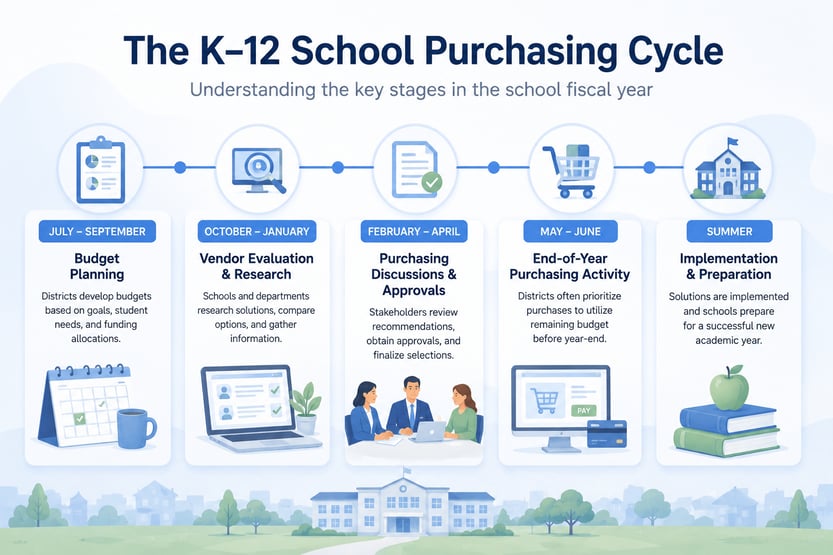
How the School Fiscal Year Shapes Purchasing Decisions
One of the biggest challenges organizations face when marketing to schools is timing outreach appropriately.
A district that is not currently evaluating a solution may not engage immediately—even if the offering is highly relevant.
At the same time, outreach that aligns with planning and budgeting periods can feel significantly more timely and useful.
This is especially important in K–12 environments where purchasing decisions may involve:
- Multiple stakeholders
- Committee reviews
- Administrative approvals
- School board processes
Understanding these timelines can help organizations create more informed and strategic engagement efforts.
End-of-Year Purchasing Activity
As districts approach the end of their fiscal year, purchasing activity often increases.
In some cases, departments may still have remaining budget allocations that need to be used before the fiscal year closes. This can create increased activity around:
- Classroom technology
- Curriculum and instructional tools
- Student support services
- Professional development and training
- Operational and administrative resources
Because many districts work within annual budget cycles, timing can become an important factor in how and when purchasing decisions move forward.
Planning Ahead for the Next School Year
While some purchasing occurs near the end of the fiscal year, many districts are simultaneously planning for the upcoming academic year.
This often includes evaluating:
- New educational technologies
- Curriculum updates
- Assessment tools
- Professional development initiatives
- Infrastructure and operational improvements
Organizations that understand these planning cycles are often better positioned to engage districts earlier in the decision-making process.
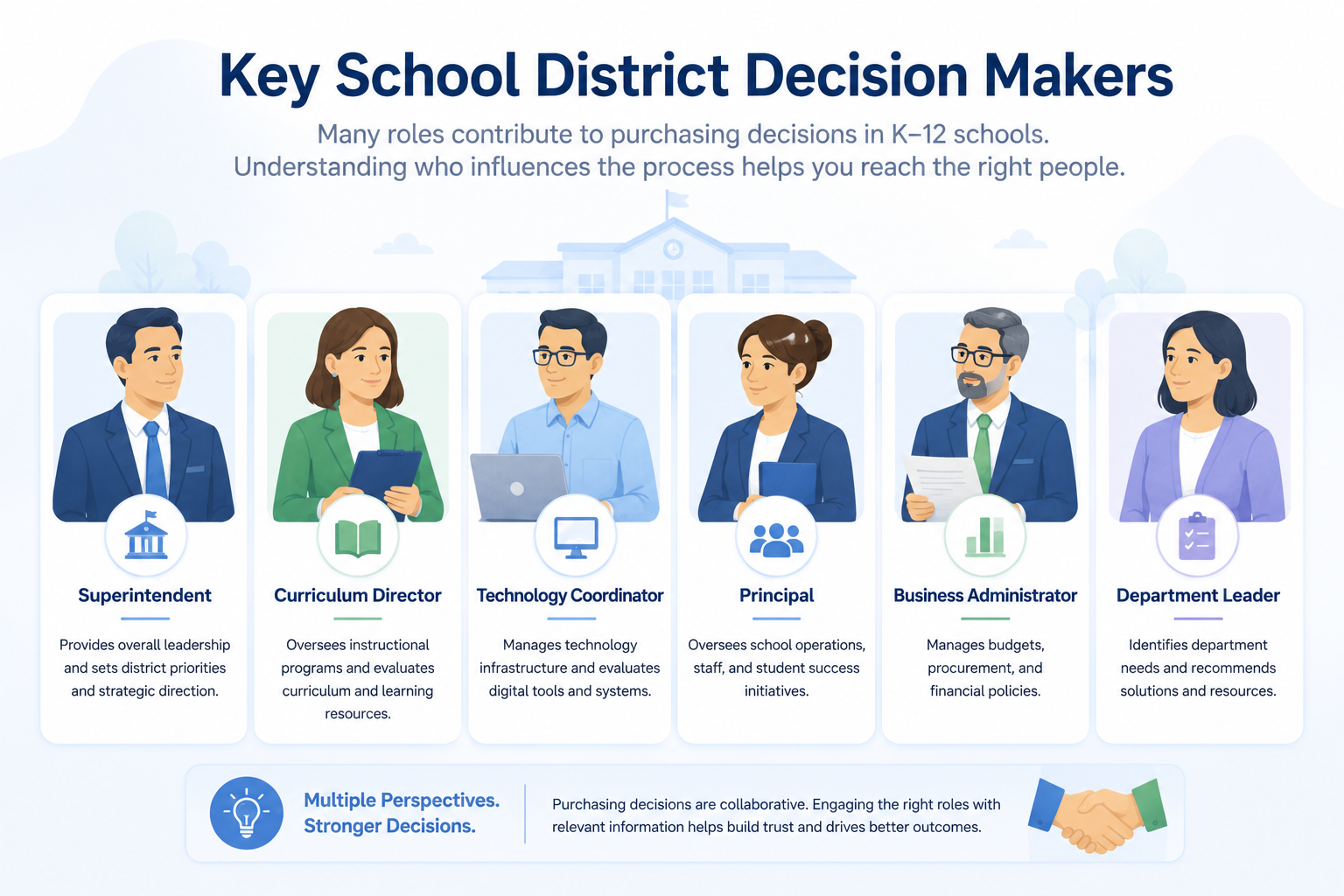
Understanding the Different Decision Makers Within School Districts
School purchasing decisions are rarely made by a single individual.
Depending on the product or service, decision makers may include:
- Superintendents
- Curriculum directors
- Technology coordinators
- Principals
- Business administrators
- Department leaders
Each role may have different priorities, responsibilities, and purchasing influence within the district.
For example:
- Technology coordinators may focus on implementation and compatibility
- Curriculum leaders may prioritize instructional outcomes
- Business administrators may focus on budgeting and procurement requirements
Understanding these distinctions can help organizations tailor outreach and messaging more effectively.
Teachers Also Play a Role in School Purchasing
While sometimes overlooked, teachers play a critical role in school purchasing decisions. They are instrumental in identifying what resources are needed in their classrooms and are advocates for the organizations they believe can meet those needs. Their influence in the decision-making process should not be underestimated. Reaching out to teachers as part of your marketing strategy can help boost grassroots support for your product and services.
Using Data to Better Understand School Markets
As K–12 purchasing environments become increasingly competitive, many organizations are looking for ways to better understand school systems and decision-making structures.
Education market data can help organizations identify:
- School and district leadership roles
- Geographic regions and district types
- Areas of instructional focus
- Relevant administrative contacts
This allows organizations to create more focused outreach strategies that align with district structures and priorities.
Rather than broad outreach, organizations can take a more targeted approach based on the audiences most relevant to their offering.
The Importance of Long-Term Relationship Building
K–12 purchasing cycles are often relationship-driven and built over time.
Districts frequently evaluate vendors based not only on products and pricing, but also on:
- Reliability
- Support
- Understanding of school environments
- Long-term partnership potential
Because of this, successful outreach is often less about immediate conversion and more about consistent, informed engagement throughout the purchasing cycle.
Final Thoughts
School purchasing decisions are shaped by budgeting timelines, planning cycles, administrative processes, and evolving educational priorities.
Organizations that understand how districts evaluate and plan purchases can create outreach strategies that feel more timely, relevant, and aligned with the realities of the K–12 environment.
As districts continue planning for future academic years, understanding the purchasing cycle can help organizations better support their goals and decision-making processes.
Learn More
Looking to better understand K–12 audiences and district decision makers?
Education Market Contact Data can help organizations identify and connect with school and district professionals across the education landscape.
