
Reaching Educators Ready for Their Next Degree:
Strategies for Graduate Program Recruitment
Graduate programs in education often serve a unique audience: professionals who are already working in the field. Teachers, counselors, instructional coordinators, and administrators frequently pursue advanced degrees while continuing their careers in schools and districts.
For universities and continuing education departments, recruiting these working professionals requires a different approach than traditional undergraduate admissions marketing. Educators are balancing full-time roles, professional responsibilities, and often family commitments. When they decide to pursue a master’s degree, doctorate, or certification program, the programs that resonate most clearly with their professional goals tend to stand out.
Institutions are also navigating a rapidly changing enrollment environment. As highlighted in an article from UPCEA on staying relevant in a changing higher education market, universities are increasingly diversifying credentials, certificates, and career-focused programs to better align with workforce needs and attract professionals seeking career advancement.
Understanding where educators are in their careers and how they evaluate continuing education opportunities can help institutions build more effective recruitment strategies.
Understanding Why Educators Pursue Advanced Degrees
Many educators pursue graduate education as part of their long-term career development. Advanced degrees and specialized certifications can open doors to new roles, increased responsibility, and leadership opportunities within school systems.
Common motivations include:
- Moving into school or district leadership roles
- Specializing in areas such as curriculum development, literacy, or instructional technology
- Meeting certification or licensure requirements
- Advancing along district salary schedules tied to graduate education
- Transitioning into counseling, administration, or academic leadership positions
Because these motivations are closely tied to professional advancement, graduate programs designed for working educators often emphasize flexibility, practical application, and alignment with real-world education environments.
Recognizing Different Career Stages Among Educators
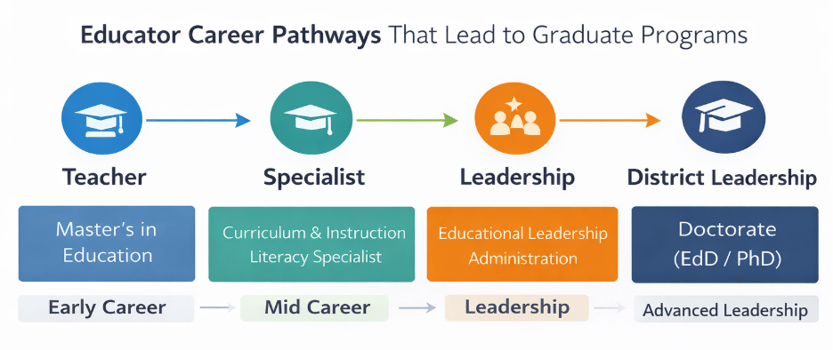
Educators pursue advanced degrees at different stages in their careers, and understanding these stages can help institutions tailor their outreach and messaging.
Early Career Educators
Teachers early in their careers often pursue master’s programs to deepen their expertise or meet district expectations for advanced education.
Mid-Career Specialists
Some educators seek specialized certifications or graduate degrees focused on areas such as:
- reading and literacy
- special education
- educational technology
- curriculum and instruction
These programs allow professionals to expand their impact within classrooms and across school systems.
Leadership Pathways
Experienced educators frequently pursue programs that prepare them for leadership positions, including roles such as assistant principal, principal, instructional leader, or district administrator. Doctoral programs in education and educational leadership often attract professionals preparing for these next steps.
By aligning program messaging with these different career stages, universities can communicate the value of their programs more effectively.
Why Traditional Recruitment Approaches May Miss Working Educators
Unlike traditional undergraduate students, educators seeking advanced degrees are typically not browsing admissions websites or attending college fairs. Many are focused primarily on their professional responsibilities and may only explore graduate programs when a specific career opportunity or professional requirement arises.
This means recruitment strategies that rely solely on traditional higher education marketing channels may miss many potential candidates.
Effective outreach often involves meeting educators where they already are within professional environments, school systems, and education communities.
Some institutions focus on building relationships through alumni networks, partnerships with school districts, or professional associations. Others develop targeted marketing initiatives designed specifically for working educators who may benefit from flexible graduate programs.
Identifying the Right Audiences for Graduate Programs
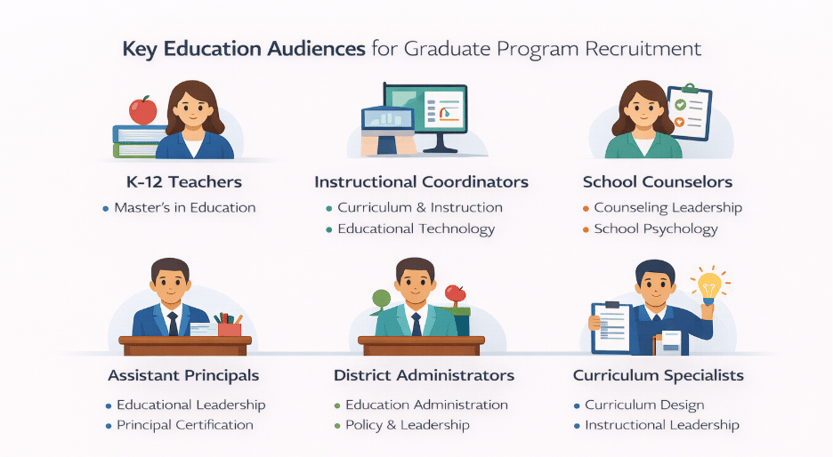
Graduate programs in education often focus recruitment efforts on professionals already working within school systems. Understanding the structure of the education workforce can help institutions identify the most relevant audiences.
Potential audiences may include:
-
- K–12 teachers
- instructional coordinators
- school counselors
- assistant principals and principals
- district administrators
- curriculum specialists
Each of these roles may have different motivations for pursuing graduate education, and targeted messaging can help programs connect more effectively with these professionals.
Some institutions rely primarily on alumni outreach or partnerships with local districts, while others expand their reach by identifying educators across broader geographic regions.
Outreach Strategies That Resonate with Working Educators
Recruiting working professionals often requires thoughtful, targeted outreach that acknowledges their schedules, responsibilities, and career goals.
Several approaches are commonly used by institutions recruiting educators into graduate programs.
Targeted Email Outreach
Email campaigns can introduce educators to programs that align with their professional interests and career pathways. Messaging that emphasizes leadership development, specialization opportunities, or flexible program formats often resonates with working professionals.
Professional Development Messaging
Many educators are already engaged in ongoing professional development. Positioning graduate programs as a continuation of that development can help institutions connect with professionals looking to deepen their expertise.
Recruitment strategies also benefit from understanding where individuals are in their professional journeys. As discussed in UPCEA’s article on delivering the right message at the right moment, enrollment teams that combine data, technology, and human insight are better positioned to connect with prospective students when their goals and timing align.
Regional Program Awareness
Educators often prefer programs located within their state or region, particularly when programs include in-person components or local partnerships. Highlighting regional connections can make programs more relevant to potential candidates.
Direct Outreach to Education Communities
School districts, professional organizations, and education networks often serve as hubs where educators share information about professional opportunities. Outreach efforts that engage these communities can help institutions reach educators more effectively.
Using Data to Better Understand the Education Workforce
Understanding the structure of the education workforce can support more strategic outreach efforts. Institutions that have access to accurate information about educators, schools, and districts can better identify audiences that align with specific graduate programs.
Some universities build internal datasets through partnerships, alumni networks, or district collaborations. Others supplement these efforts with structured education workforce data that provides insights into educators across schools and districts.
Having visibility into roles, institutions, and geographic distribution can help institutions focus their outreach on educators who may be most likely to benefit from their programs.
Final Thoughts
Educators who pursue advanced degrees bring valuable experience and perspective to graduate programs. Recruiting these professionals requires an understanding of their career goals, professional environments, and the pathways they follow as they grow within the education field.
Institutions that align their outreach strategies with the realities of the education workforce can create stronger connections with educators who are ready for their next academic and professional step.
Learn More
Many institutions explore education workforce data as one way to better understand and reach educators across schools and districts. Structured Education Market Contact Data can help universities identify professionals working in specific roles, subjects, and geographic regions.
For example, a university promoting a Master’s degree in Science Education may focus outreach on educators currently teaching science subjects in K–12 schools. Recruitment efforts can then be further refined by factors such as career stage, geographic region, or educators earlier in their careers who may be more likely to pursue graduate credentials as part of their professional advancement.
By combining role, subject area, and regional insights, institutions can design outreach strategies that connect programs with educators most likely to benefit from advanced degrees.
Frequently Asked Questions About Recruiting Educators for Graduate Programs
How do universities recruit teachers for master’s and doctoral programs?
Universities often recruit educators by focusing on professionals already working within schools and districts. Outreach efforts frequently emphasize leadership pathways, specialized certifications, and flexible program formats designed for working educators pursuing career advancement.
Why do teachers pursue graduate degrees while working?
Many educators pursue graduate degrees to deepen their expertise, qualify for leadership roles, or advance along district salary schedules that reward advanced education. Flexible program formats, including online and hybrid programs, allow educators to continue working while completing graduate coursework.
What audiences are most relevant for graduate education recruitment?
Graduate programs in education often focus on professionals already working in school systems. This can include K–12 teachers, instructional coordinators, school counselors, assistant principals, principals, and district administrators who are exploring opportunities for career advancement or specialization.